English learning log

English learning log

FILL IN THE GAPS

2021. június 28. - polly graph

words to use in the gaps:

enough, from, including,  have, having, does,  Secretary, since


The government's expansion of the UK's green travel list ........... (1) not go far enough, industry leaders ........... (2) warned.

Arrivals from 16 places, ........... (3)  Spain's Balearic islands, will not have to quarantine .......... (4) 04:00 on Wednesday.


words to use in the gaps:

enough, from, including,  have, having, does,  Secretary, since


Transport ........... (5) Grant Shapps also said the government plans to drop quarantine for fully vaccinated people returning from amber list countries "later in the summer".

But EasyJet has said the timetable "simply isn't ambitious ........... (6)".

Among the places being added to the UK's green list is Malta, which has ........... (7) tightened travel rules for British holidaymakers.

From 30 June, only arrivals from the UK who have been fully vaccinated - with a vaccine certificate recognised by the Maltese Health Authorities - will be allowed into Malta without ........... (8) to quarantine.


words to use in the gaps:

enough, from, including,  have, having, does,  Secretary, since


source: https://www.bbc.com/news/uk-57606348

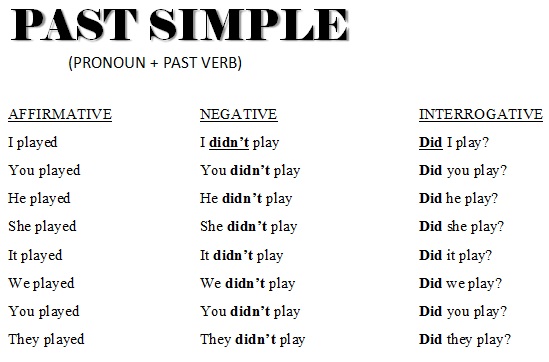
Learn English Tenses: PAST SIMPLE

Negative:

I didn't swim yesterday.

Nor did I.

Question:

Did you swim yesterday?

Positive:

I swam yesterday.

https://www.englishclub.com/grammar/verb-tenses_past_quiz.htm


I was reading when the phone rang.

I was sleeping when the postman rang.

I was shopping when I lost my bag.

I was drying my hair when the blackout started.

I was feeding the dogs when the neighbour's cat jumped up the fence.

Past Simple (lesson of 21 April) - renglish

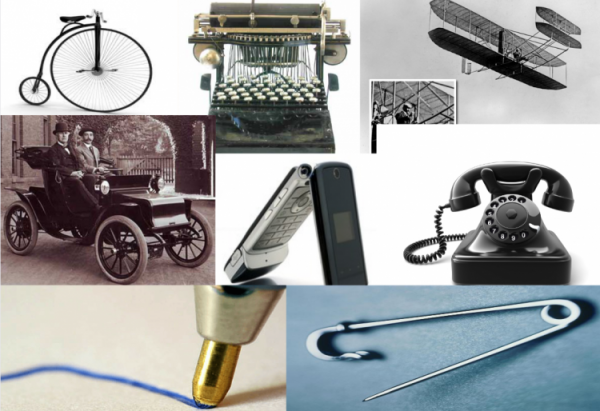
Top 10 Inventions That Changed The World

The Greatest Inventions In The Past 1000 Years
  Invention Year Inventor Notes
1 Printing Press 1450 Gutenberg
2 Electric Light 1879 Thomas Edison
3 Automobile 1885 Karl Benz
4 Telephone 1876 Alexander Graham Bell
5 Radio and Television 1895 & 1926 Guglielmo Marconi & John Baird
6 Vaccination 1796 Edward Jenner
7 Computer 1939 John Atanasoff, et al.
8 Airplane 1903 Orville and Wilbur Wright
9 Gas powered tractor 1892 John Froelich 
10 Anesthesia 1844 Horace Wells

Source: https://ehistory.osu.edu/articles/greatest-inventions-past-1000-years

spread communication across wide areas

started agricultural mechanization

increased personal mobility and freedom

provided a great leap forward for medicineallowed people and products to quickly move

powered countless social changes

made the world smaller

protected people from disease

transformed business world; predecessor to the Internet


allowed literacy to greatly expand

7 USEFUL PHRASES TO RECOMMEND A PLACE

7 useful phrases to recommend a place

Make .......... you go to Regent’s Park. It’s a lovely place for a picnic.

Have you been to Primrose Hill ........... ? The view is incredible!

You really ........... visit Spitalfields Market. You can pick up some great bargains!

Buckingham Palace is an absolute .......... !

Covent Garden is definitely .......... visitingIt’s a great place to people-watch!

I’d do a boat trip along The Thames if ............

Why .......... do a bus tour? That way you can see all the famous landmarks.

Words to use in the gaps: 

I were you

sure 

should

worth 

must-see

yet

don’t you

 Imagine an English friend is coming to visit your town! Where would you recommend? Fill the gaps with recommendations and ideas from your own town/city.

  1. Make sure you go to _______________.
  2. Have you been to _______________ yet?
  3. You really should visit _______________.
  4. _______________ is an absolute must-see of course!
  5. _______________ is definitely worth visiting.
  6. I’d _______________ if I were you
  7. Why don’t you _______________? That way _______________
https://www.theenglishenglishteacher.com/how-to-recommend-a-place-in-english/

MONEY AND MAIL - fill in the gaps

1. Mr. Brown bought a new Ferrari last week. He’s got ...........

2. We were both laid off, so it looks like we’ll have to ..........  until we find work.

3. We needed some cash so we withdrew some from the ........... .

4. I don't think you can ......... Tom coming tonight. He's really unreliable.

5.  When delivering must have the ........... 's signature.

6. I don't have enough money to go on holiday. I'm afraid it would .......... .

7. The man ........... and shot twelve of his colleagues.

8. It's the first time I had ever ........... my account. I think I've spent too much.

9. Even though it is now called ........... , regular mail is anything but slow.

10. The Prime Minister said the government would continue to pay .......... on its debt. 


 Basic Money and Bank vocabulary - Ingyenes angol online nyelvtanulás  szórakozvaHow to Make an Extra $1,000 This Month | Saving and Budgeting | US News


Answer the questions


Dengue fever cases have been cut by 77% in a "groundbreaking" trial that manipulates the mosquitoes that spread it, say scientists.


They used mosquitoes infected with "miraculous" bacteria that reduce the insect's ability to spread dengue.


The trial took place in Yogyakarta city, Indonesia, and is being expanded in the hope of eradicating the virus.


The World Mosquito Programme team says it could be a solution to a virus that has gone around the world.


Few people had heard of dengue 50 years ago, but it has been a relentless slow-burning pandemic and cases have increased dramatically.


In 1970, only nine countries had faced severe dengue outbreaks, now there are up to 400 million infections a year.


Dengue is commonly known as "break-bone fever" because it causes severe pain in muscles and bones and explosive outbreaks can overwhelm hospitals.


The enemy of my enemy


The trial used mosquitoes infected with Wolbachia bacteria. One of the researchers, Dr Katie Anders, describes them as "naturally miraculous".


Wolbachia doesn't harm the mosquito, but it camps out in the same parts of its body that the dengue virus needs to get into.


The bacteria compete for resources and make it much harder for dengue virus to replicate, so the mosquito is less likely to cause an infection when it bites again.


The trial used five million mosquito eggs infected with Wolbachia. Eggs were placed in buckets of water in the city every two weeks and the process of building up an infected population of mosquitoes took nine months.


Yogyakarta was split into 24 zones and the mosquitoes were released only in half of them.


The results, published in the New England Journal of Medicine, showed a 77% reduction in cases and an 86% reduction in people needing hospital care when the insects were released.


"It's very exciting, it's better than we could have hoped for to be honest," Dr Anders told the BBC.


The technique has been so successful the mosquitoes have been released across the whole city and the project is moving to surrounding areas with the aim of eradicating dengue in the region.


Dr Anders, who is also the director of impact assessment at the World Mosquito Programme, said: "This result is groundbreaking.


"We think it can have an even greater impact when it is deployed at scale in large cities around the world, where dengue is a huge public health problem."


Wolbachia are also spectacularly manipulative and can alter the fertility of their hosts to ensure they are passed on to the next generation of mosquitoes.


It means once Wolbachia has been established, it should stick around for a long time and continue to protect against dengue infection.


This is in sharp contrast to other control methods - such as insecticides or releasing large numbers of sterile male mosquitoes - that need to be kept up in order to suppress the blood-suckers.


Dr Yudiria Amelia, the head of disease prevention in Yogyakarta City, said: "We are delighted with the outcome of this trial.


"We hope this method can be implemented in all areas of Yogyakarta and further expanded in all cities in Indonesia."


The trial is a significant landmark after years of research as the species of mosquito that spreads dengue - Aedes aegypti - is not normally infected with Wolbachia.


Disease modelling studies have also predicted Wolbachia could be enough to completely suppress dengue fever if it can be established.


David Hamer, a professor of global health and medicine at Boston University, said the method had "exciting potential" for other diseases such as Zika, yellow fever and chikungunya; which are also spread by mosquito bites.


https://www.bbc.com/news/health-57417219


1.      How did the bacteria affect the mosquitoes?


2.      What’s the aim of the trial?


3.      Did many people know about the virus in 1970?


4.      What are the major symptoms of dengue?


5.      How long did it take to raise an infected generation of mosquitoes?


6.      How did the trial affect the number of hospitalized people?


7.      Who is Dr Anders?


8.      Does Wolbachia have an impact on the next generation of mosquitoes?


9.      Is Dr Yudiria Amelia satisfied with the results?


10.  Will the method be used with other diseases?


süti beállítások módosítása